Palm Harbor, FL · Garage Door Service
Why Your Garage Door Lets in Drafts
Palm Harbor homes built from 1958 to 2005 lose seal integrity differently depending on age. Here's what drafts around your garage door actually mean and cost to fix.
- Repairs & new doors
- Springs & openers
- Serving 4 nearby communities
The Problem
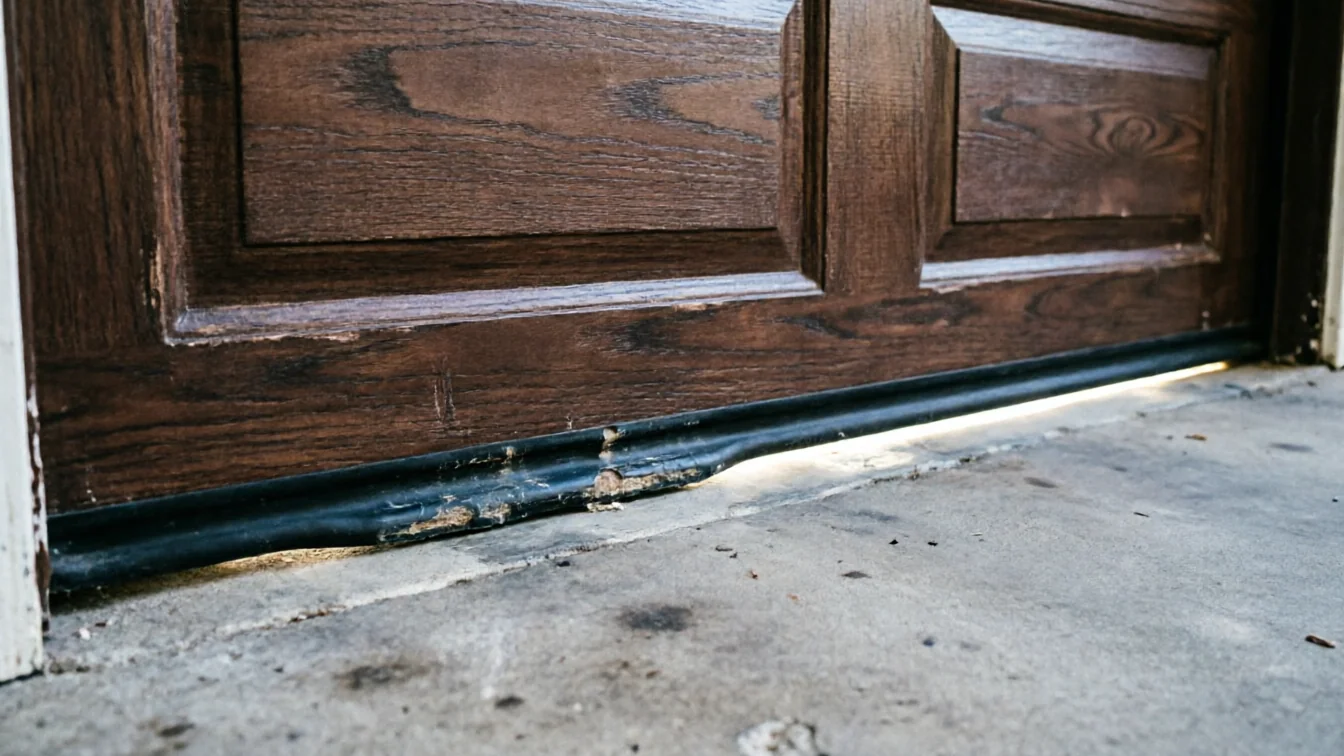
Most garage doors in this area went up somewhere between 1958 and 2005, with the bulk of the stock dating to the 1980s and 90s. That matters because the bottom seal and side weather stripping on a door that age were never built to last this long - vinyl and rubber both harden and crack over twenty or thirty years of Florida sun and humidity cycling. You feel it as a draft along the bottom edge, or you see daylight at the corners where the track meets the slab. On older one-piece doors from the earlier end of that build range, the seal channel itself is often the wrong profile for what's sold today, which means a straight swap isn't always possible without also replacing the retainer. The mild temperate conditions here don't put the kind of thermal stress on seals that you'd see further north, but UV exposure and the humidity swing between wet and dry season do the same job more slowly. A gap that started as a quarter inch of light at the corner turns into standing water on the slab after a hard rain, which is a different and more expensive problem than a draft.
Leaving It Alone
A cracked bottom seal on its own won't hurt the door. It'll let in bugs, a little water during heavy rain, and more dust than you'd like on anything stored near the opening. Where it gets worse is if water sits against the bottom panel for years - on steel doors from the 1980s and 90s stock common across this service area, that's where rust starts, right at the bottom corners where the seal failed first. Wood-trimmed doors from the same era rot at the same spot. Neither failure happens fast. It happens slow enough that most owners don't notice until the bottom few inches of the panel are soft or flaking, at which point you're looking at panel replacement instead of a seal, which is a different job and a different bill. The honest version: a worn seal is low priority right up until it isn't, and the point where it tips over depends on how much rain that corner of your driveway actually collects.
What You Pay
Seal replacement is one of the cheaper jobs we do, and the range depends mostly on which seal profile your door uses and whether the retainer track needs replacing along with the rubber. Doors from the earlier end of the 1958-2005 build range sometimes need a retainer swap because the original channel doesn't match current stock seal widths. Side and top weather stripping add to the job but aren't usually priced separately when done at the same visit. We don't have a number to quote you here without seeing the door - profile, length, and whether the track is bent or just worn all change it. What we can tell you is that it's a small job compared to anything involving the panel itself, which is the real reason to deal with drafts before they turn into water damage.
How Local Conditions Play In
Palm Harbor sits in a mild temperate band, which means you're spared the freeze-thaw cycling that destroys seals in colder climates fast. What you get instead is sustained humidity and UV that breaks down vinyl and rubber more gradually but just as completely over a couple of decades. Areas close by like Crystal Beach, a mile to the west-northwest, and Ozona, just southwest, sit near enough to open water that salt air adds another layer of wear on top of the sun and moisture most doors in this area deal with anyway. Homes further out toward East Lake or Oldsmar see the same housing-age pattern - 1980s and 90s construction dominates - so the same seal failure shows up on the same schedule, regardless of which side of the service area you're on. None of this means your seals fail on a fixed timeline. It means the mechanism is the same everywhere here: sun and moisture, not cold, doing the damage.
Frequently asked questions
How do I know if it's the seal or something else letting in drafts?
Close the door and check from inside with the lights off during daylight - any light at the bottom edge or side jambs is a seal gap, not a structural issue. If you see light only at one corner, that's often a bent track rather than worn weather stripping, which is a different repair.
Does the humidity here make seals wear out faster?
It's less about heat and more about the cycle between wet and dry seasons, which stresses vinyl and rubber over years. Homes near the water, like those close to Crystal Beach or Ozona, also deal with salt air on top of that, which can shorten seal life further.
Can I just replace the bottom seal myself?
On newer doors with a standard track profile, yes, it's a straightforward swap. On older doors from the earlier end of the local build range, the retainer channel sometimes doesn't match current seal widths, and that's where a DIY job turns into buying the wrong part twice.
Is a drafty garage door actually hurting anything?
Not right away. The real risk is water sitting against the bottom panel over years, which starts rust on steel doors or rot on wood trim. A draft today is a cosmetic nuisance; the same gap left for a decade can mean replacing the panel instead of the seal.
Related garage door services in Palm Harbor
More garage door guides
Book garage door service in Palm Harbor
Call now or request a quote - tell us what the door is doing and where you are.