
Palm Harbor, FL · Garage Door Service
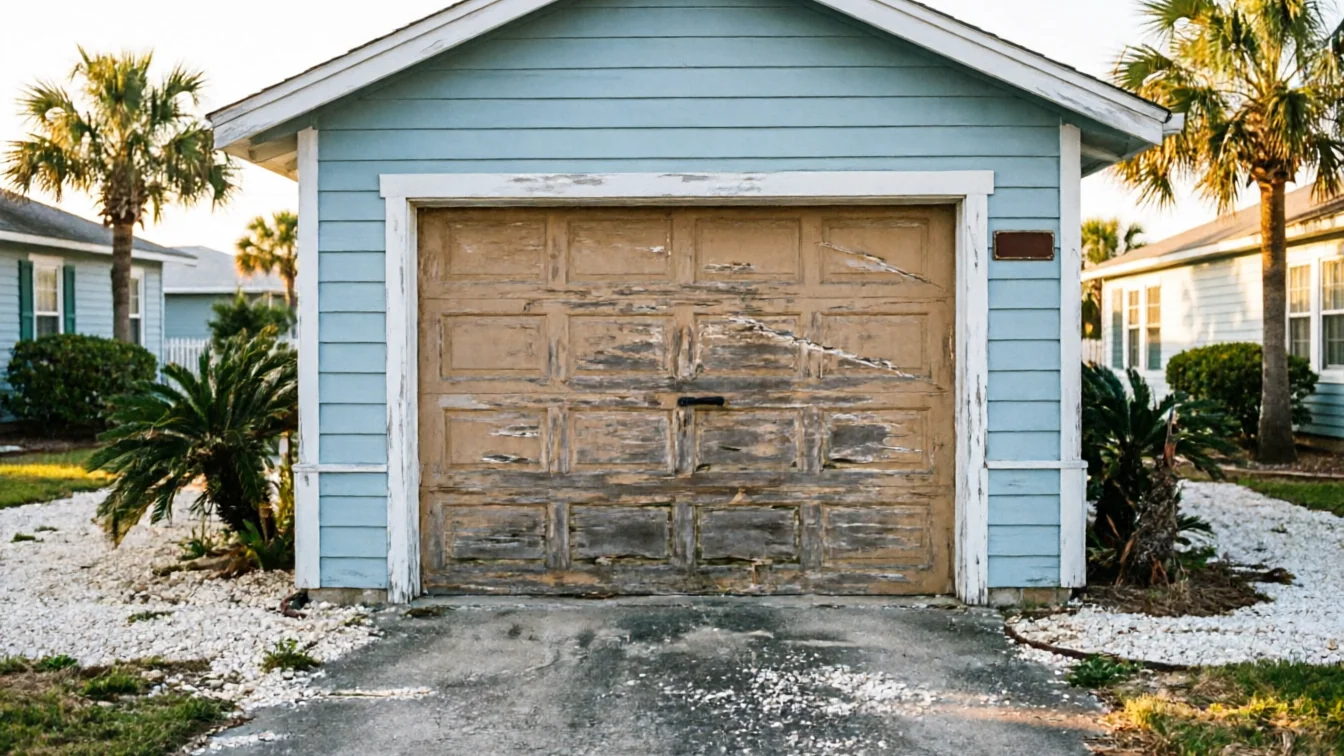
Is Your Palm Harbor Garage Door Still Worth Fixing?
Palm Harbor homes built mostly in the 1980s and 90s often carry original garage doors. Here's how to tell if yours is worth fixing or ready for a new one.
- Repairs & new doors
- Springs & openers
- Serving 4 nearby communities
The Problem
Most houses around Palm Harbor went up between 1958 and 2005, with the median landing around 1980. That puts a huge share of the original garage doors and openers in this area somewhere between twenty and sixty years old. Across the 31 named areas that make up this part of the county, the stock leans hard toward 1980s and 90s construction, which means a lot of homes are hitting the same wall at the same time: torsion springs rated for a certain number of cycles, steel panels that have been painted over a few times, and openers with chain drives and circuit boards nobody is making parts for anymore.
The question we get isn't usually "is something wrong" - it's "is this worth fixing." A door from that era can still run fine day to day and still be one dead capacitor away from needing a full opener swap, or one more broken spring away from the torsion tube itself showing fatigue. Age by itself isn't the problem. Age combined with original hardware that was never upgraded is what turns a $150 call into a full replacement conversation.
Leaving It Alone
Palm Harbor sits in a mild temperate band, so a door here isn't fighting the freeze-thaw cycling that splits panels and snaps cables in colder parts of the country. That's a real advantage - it means doors here often last longer on the structural side than the same door would somewhere with hard winters. But mild doesn't mean nothing happens. Humidity and daily temperature swings still work on rollers, hinges, and the galvanized coating on cables and springs, just more slowly.
The risk with a 1980s or 90s door isn't sudden failure from weather. It's gradual wear that goes unnoticed because the door still opens and closes. A worn roller or a spring near the end of its cycle count doesn't usually announce itself - it just gets a little louder, a little slower, until one day it doesn't catch. Leaving an aging door alone in this climate is less about risking damage and more about losing the window where a repair is still cheaper than a replacement.
What You Pay
We don't have a flat number to hand you here, because what a repair costs depends on what's actually failing - a spring, a cable, a section of track, or the opener itself - and how far the rest of the door has drifted from spec. What we can tell you is how to think about the decision. With a median household income of $77,335 across the service area, replacing a door outright is a realistic option for a lot of homeowners here, rather than something to avoid at all costs. That changes the math compared to areas where stretching every repair as long as possible is the only option.
If your door is original to a house built in the 1980s or 90s, a single spring repair is almost always worth doing - springs are a wear item, not a sign the door is failing. Where it stops being worth it is when the opener, the track, and the hardware are all original and all aging out together. At that point you're often paying repair prices toward something that still needs replacing in a year or two.
How Local Conditions Play In
Houses in this part of the county, from Crystal Beach a mile up the road to Ozona just southwest, mostly share the same build era and the same mild climate exposure, so the fix-or-replace math holds pretty steady across this stretch. A door doesn't get hammered by road salt or deep freezes here, which is why structural failure on an older door is less common than wear failure - the slow kind, where rollers bind and cables fray gradually instead of cracking from cold.
That consistency is actually useful when you're deciding what to do with an aging door. If your house was built anywhere in the broad 1958-2005 range common to this area, and especially if it falls near the 1980 median, you're dealing with hardware that was engineered to a lower cycle-count standard than what goes into doors today. Fixing a single component - a spring, a cable, a bottom roller - is usually a good bet. Replacing everything at once makes more sense once two or three original components have already failed, because at that point you're not fixing a door, you're financing its retirement one part at a time.
Frequently asked questions
My garage door is from the original 1980s build - is it too old to repair?
Not automatically. Age alone doesn't disqualify a door. If the track is straight, the panels aren't rusted through, and only one component has failed - usually a spring or a cable - a repair is often the right call even on a door from the 1980s median build era common here.
Does Palm Harbor's climate wear out garage doors faster?
The mild temperate band here is actually easier on doors than colder climates - no freeze-thaw cracking panels or snapping cold-stiffened cables. Wear still happens through humidity and daily use, just more gradually, which is why failures here tend to be slow wear rather than sudden breaks.
How do I know if I should replace instead of repair?
Look at how many original components are still in play. One failed spring on an otherwise sound door is a repair. An original opener, original track, and original springs all showing age at once usually means you're better off replacing the whole door rather than repairing it piece by piece.
Related garage door services in Palm Harbor
More garage door guides
Book garage door service in Palm Harbor
Call now or request a quote - tell us what the door is doing and where you are.